Keys to Improve Your Spanish in 2026: Expert Strategies That Actually Work
Real advice from an experienced Spanish teacher on how to improve Spanish fluency fast—no sugarcoating, just honest methods that work for different learning styles
The Truth About Spanish Learning: It Depends on YOU
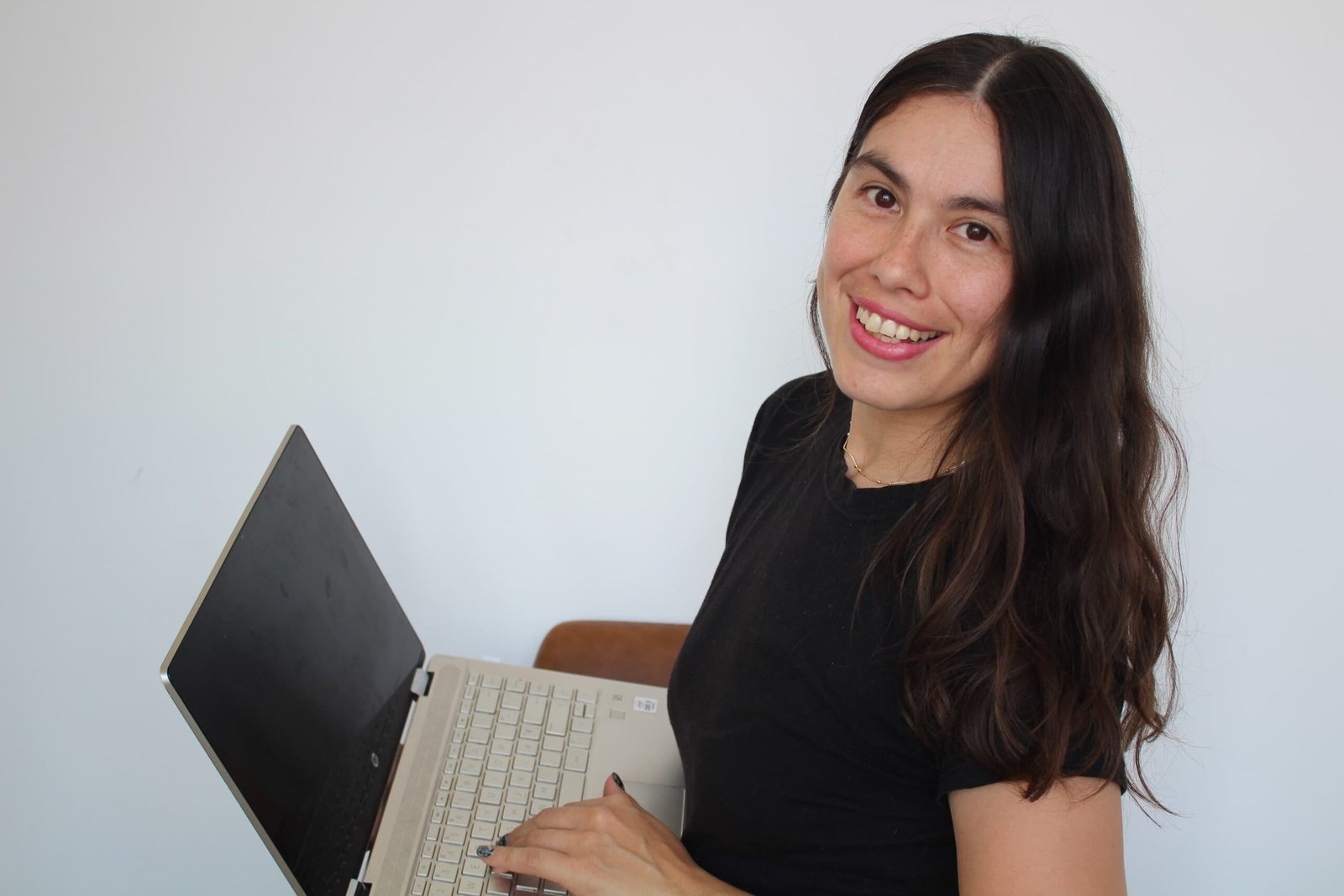
“I know you’re going to say, ‘Oh Daniela, here you go with your “it depends,”‘. Daniela Barrera, a Spanish teacher with 8 years of experience teaching both Spanish and English in Tijuana. She’s sitting down with Adrián Guzmán for a candid conversation about what actually works when learning Spanish—and what doesn’t.
And she’s right. The most honest answer to “What’s the best way to learn Spanish?” is frustrating but true: it depends.
But here’s what makes this different from typical language learning advice: Daniela and Adrián aren’t selling you a one-size-fits-all system. Instead, they’re sharing real Spanish learning tips for intermediate students and beginners alike, drawn from years of watching what works (and what spectacularly fails) in the classroom and beyond.
If you’re tired of generic advice and want to know how to improve Spanish fluency fast based on your actual learning style, personality, and goals—keep reading.
Should You Practice with a Teacher or a Native Speaker?
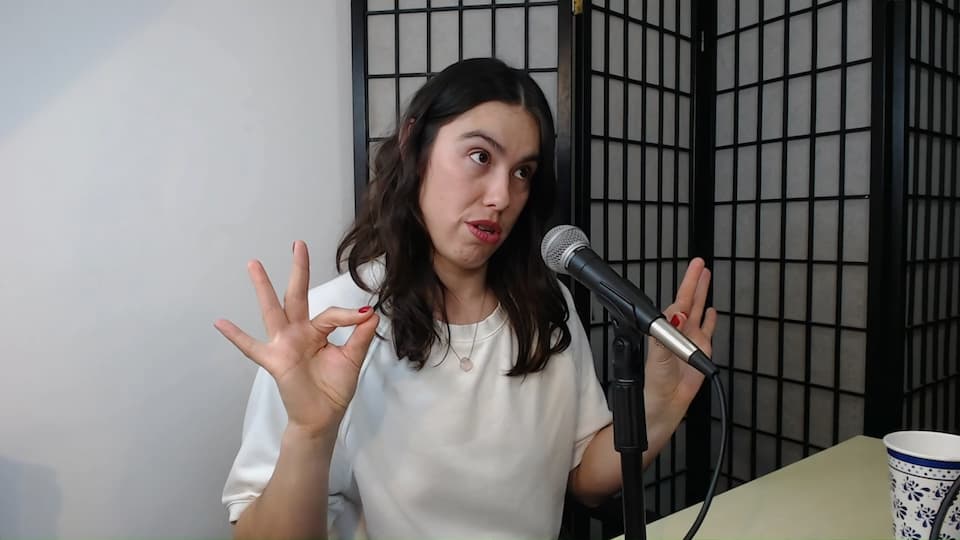
Let’s start with the question that trips up most learners: Is it better to practice with a professional teacher who carefully modulates their Spanish, or should you jump straight into conversations with native speakers who talk at full speed?
Daniela’s answer reveals something most courses won’t tell you:
For Beginners: Structure Beats “Authenticity”
“It depends a lot on the level you’re at,” Daniela explains. “If at the beginning you learn more slowly, so to speak, it’s going to be very frustrating for you to expose yourself to the language—which for me is the most effective method. You’re going to expose yourself to the language, you’re not going to understand anything, you’re going to get frustrated, you’re going to block yourself, and you won’t have a good experience.”
Her recommendation? Start with an experienced teacher—preferably one who shares your native language.
Why someone who speaks your language rather than a native Spanish speaker? “If I’m learning English, you might think, ‘Oh, a teacher from the United States or England will teach me best.’ But they won’t know what difficulties you have speaking Spanish when learning English,” Daniela points out. “And vice versa.”
She even adapts her word choice based on students’ native languages: “For example, if I colloquially say ‘parecido’ (similar) with my family, when I’m in a Spanish class, I look for the word ‘similar’—because the word ‘similar’ is similar to ‘similar’ in English. If I say ‘parecido,’ they’ll ask what ‘parecido’ means, but if I say ‘similar,’ they already understand.”
This strategic approach to Spanish learning strategies that work means faster comprehension and less cognitive load for beginners.
For Intermediate Students: Push Your Limits
Once you’ve built a foundation, the strategy flips.
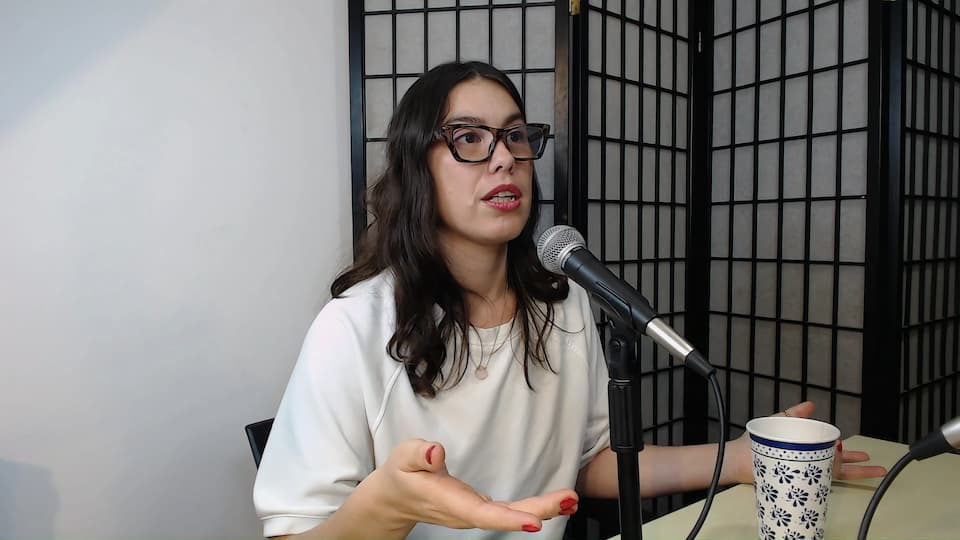
“When you’re at an intermediate level, I do recommend that you push yourself to a higher level than what you have,” Daniela advises. “Because you’re going to force yourself to understand. It’s like, ‘They said five words in a phrase and I understood three,’ but you learned the general idea. And maybe in that same phrase you learned a new word.”
This is where Spanish immersion tips for adults become crucial. You need controlled challenge—enough difficulty to grow, but not so much that you shut down.
The Listening Comprehension Wall: Why You Understand Nothing in Real Conversations
Here’s a scenario every Spanish learner knows: You’ve been studying for months. You can conjugate verbs, construct sentences, order at restaurants. Then you meet a local for casual conversation and… complete disaster.
“Even when you’re able to do certain things with Duolingo or other methods you’re using at home and you feel like you can now construct basic sentences and go shopping or go to a restaurant, that’s one thing,” Daniela acknowledges. “But encountering and meeting people locally and having informal chat is a whole different ball game.”
Why Real Spanish Sounds Like Gibberish
The problem isn’t you—it’s the gap between classroom Spanish and street Spanish:
1. Slang Overload
Textbooks don’t teach you the colloquialisms that pepper every real conversation.
2. Incomplete Sentences
“The sentences are very abrupt, it’s never a complete sentence, which makes it really hard for your ears to pick up,” Daniela explains. Native speakers don’t speak in perfect subject-verb-object constructions. They drop words, trail off, interrupt themselves.
3. Speed and Pronunciation
“We Mexicans believe we speak very clearly because each letter is one sound, but when speaking we do exactly the same as in English. We drag the end of words, we stick one word to another, we speak very fast.”
The Solution: Strategic Exposure
The fix isn’t to avoid real conversations—it’s to approach them strategically. This is where the best methods to learn Spanish naturally intersect with deliberate practice:
- Start with quality audio – Poor audio quality makes comprehension exponentially harder
- Choose the right content – Not all “intermediate level” podcasts are created equal
- Focus on what you DO understand – More on this game-changing mindset shift later
The Cultural Connection: Why Liking the Culture Matters More Than You Think
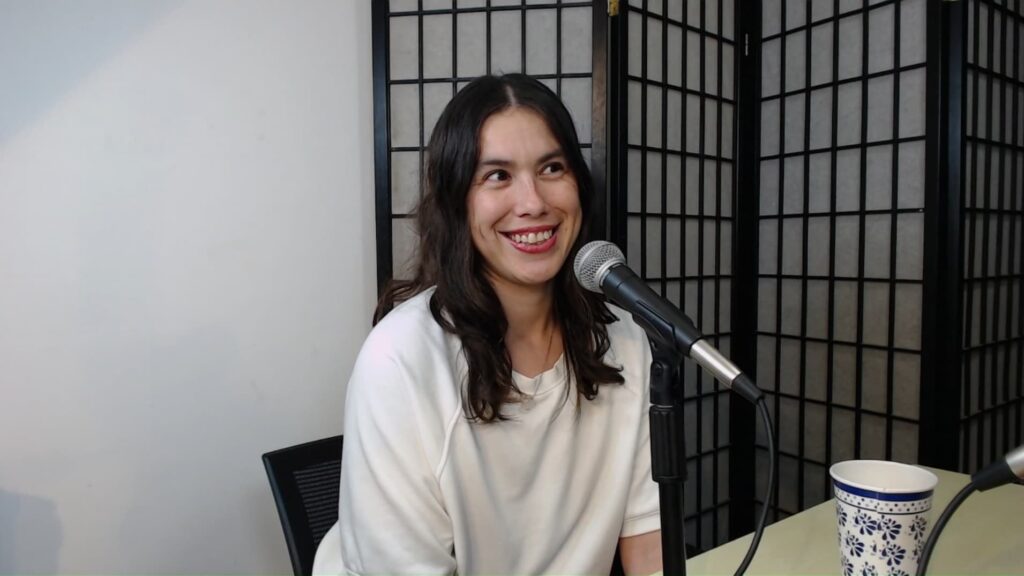
“The most effective thing is to expose yourself to the language,” Daniela insists. “But it has to be that you like the culture. If you don’t like it, if you don’t click, that’s going to be the most difficult language, that’s going to be your biggest obstacle.”
She shares a personal example that illustrates this perfectly:
The Japanese Paradox
“I studied Japanese for a year and I fell in love with the structure, but I didn’t click with the culture,” Daniela admits. “So I couldn’t connect. I can understand the culture, but it’s not part of my personality. So for me it’s difficult to integrate words, concepts, sayings, because it doesn’t go with me.”
Adrián offers another perspective: “Maybe you haven’t found the angle from which to view the culture that appeals to you. Japan has such a large, vast culture that if you see it from one focus and you don’t like it, you can end up pigeonholing it.”
But Daniela stands firm: Without cultural resonance, language learning becomes mechanical drudgery rather than exciting discovery.
How Language Reveals Personality
This leads to one of the most fascinating parts of their conversation: how different languages connect to different parts of your personality.
Daniela describes her multilingual identity:
In Japanese: “I’m very formal. I even use some words or say thank you or thank you very much when I want to be very polite in Japanese. Why? I don’t know, because that’s how it comes out naturally, because that’s how Japanese culture is—very formal and very grateful and very honorable.”
In French: “I tend to have two personalities. It’s when something disgusts me or I don’t like it or I want to criticize something, but also when they pamper me, when I feel spoiled, when I feel cherished, I use French.”
In Italian: “I’m outgoing. I feel like my heart opens up. I feel like more parts of me connect with Italian.”
In English: “The culture in the United States is very much ‘if you dream it, you achieve it.’ It’s the complete opposite of the Mexican culture of ‘How are you going to want to do this?’ In the United States it’s like, ‘If you want to do it, go ahead.’ For me, English is setting goals, feeling motivated.”
In Spanish: “I’m intense. All the emotions, but some parts of me flow more in other languages.”
This isn’t just poetic musing—it’s a practical reality of language acquisition. If you can’t find a piece of yourself that resonates with Spanish culture, your Spanish conversation skills will always feel forced rather than natural.
The Tijuana Advantage: Spanish Immersion Without the Plane Ticket
For learners in Southern California, Daniela and Adrián offer a unique perspective on Spanish immersion tips for adults: Tijuana is your secret weapon.
“If you’re in San Diego or Orange County, and I’m sure if you’re in San Diego or Orange County, you’ve probably crossed the border and you’ve probably been to Rosarito or Puerto Nuevo and done the same things,” Adrián notes. “But do take the time, maybe stop by [our school], talk to the folks here, maybe go downtown and go to the restaurants.”
Why Tijuana Beats Traditional Immersion
Proximity: “It could be 15 minutes or five miles away from San Diego and yet it’s an entirely different world, especially when you dig deeper.”
Affordability: Live or practice Spanish without the cost of flying to Spain or South America.
Real-World Practice: “You go beyond the shops and vendors that speak English to you—it’s an entirely different country. And once you can immerse yourself in that, I think you’ll gain a lot more than just going out to Rosarito and having some shrimp.”
Creative Immersion Strategies
Students have found innovative ways to practice:
Maggie’s Art Studio: “She rented part of an art collective and gave her workshops. So she was practicing Spanish while giving workshops. Open Art Studio, she called it.”
Volunteering: “We’ve had several students who volunteer, and that experience has served them again to reinforce their Spanish, to improve their Spanish.”
Professional Networking: Like Dice (whose story we covered previously), students connect with professionals in their field, using Spanish for real business conversations.
The key insight: How to practice Spanish conversation skills isn’t about finding perfect scenarios—it’s about creating contexts where Spanish becomes necessary and natural.
Use It or Lose It: The Brutal Truth About Language Maintenance
Daniela drops a hard truth that every Spanish learner needs to hear:
“I studied French for two years. I even went on an exchange to France, I came back with B1—conversation, supposedly basic conversation. And ask me today if I can have a conversation in French. No.”
Why Languages Disappear
“If you don’t use it, you lose it. That happens with everything—with muscles, with words, with language, with everything. You have to use it because if not, your brain says, ‘We don’t need it, so let’s discard it.'”
It’s the Inside Out principle applied to language: unused memories fade.
How to Make Spanish Part of Your Life
The solution isn’t more intense study—it’s Spanish learning habits for busy professionals that integrate the language into your daily routine.
Adrián shares his approach: “What I’m dedicated to currently, many people speak English too. And you start using words, you start talking and suddenly you’re speaking in English. I consume a lot of content in English.”
Why English content? “In marketing, there’s no better source than the English-speaking sources I consume. They’re the ones with the most investment in this type of knowledge, who invest the most in the market, and who do the most research.”
The principle applies to Spanish: Find content that serves your interests, not just your language goals.
- For foodies: Spanish cooking shows and recipe channels
- For business professionals: Latin American business podcasts
- For fitness enthusiasts: Spanish-language workout channels
- For parents: Spanish children’s content (works for adults learning too!)
“You have to make the language part of your life, part of your day,” Daniela emphasizes. “How do you use that language so you don’t lose it?”
The Repetition Secret: Why Kids Learn Faster (And What Adults Can Steal)
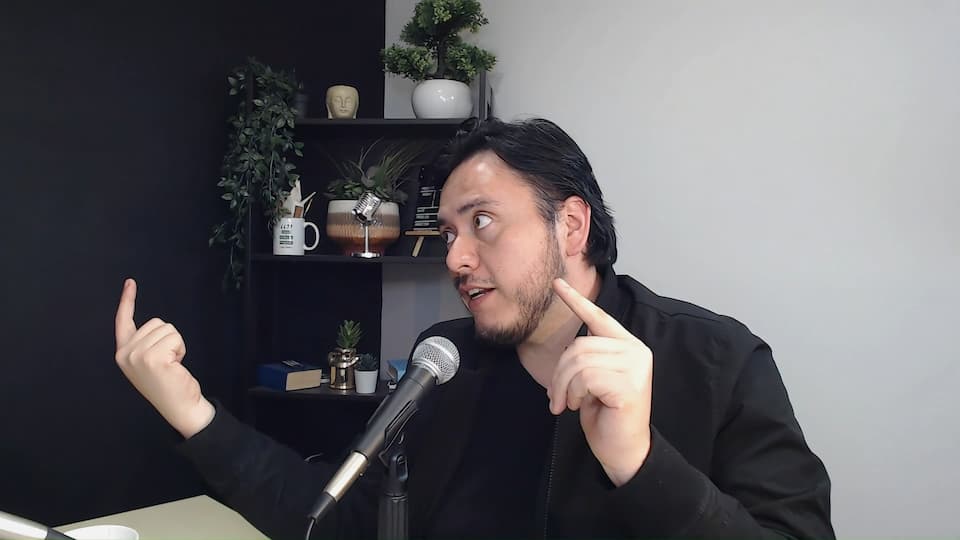
“People say kids are like sponges, but really they’re also given that time to repeat things,” Adrián observes, sharing how his young daughter repeats phrases from Japanese shows.
He references Zig Ziglar: “Repetition is the mother of all learning.”
But here’s the catch: “You also have to like it. If you’re repeating and it gets to the point where if you don’t like it, obviously you’re going to stop doing it and you’re going to forget it.”
The Adult Learning Advantage
Adults can’t replicate childhood language acquisition, but they have unique advantages:
Strategic Focus: You can target exactly what you need (business terms, travel phrases, dating vocabulary—whatever matches your goals).
Meta-Cognitive Awareness: You understand how you learn best, which kids don’t.
Motivation Clarity: Adults usually have concrete reasons for learning (career advancement, travel, relationships), providing stronger sustained motivation than mandatory school lessons.
The key is finding Spanish practice techniques for self-learners that leverage these advantages while incorporating the repetition that makes language stick.
Study Abroad Done Right: Why You Need Basics First
When the conversation turns to study abroad and language exchanges, Daniela offers counterintuitive advice:
“I recommend that you really take advantage of an exchange in language and culture—go with basics. Go with A1, A2, so you can introduce yourself, you can say your routine, you can ask how much things cost.”
The Diving Bell Problem
“Otherwise it’s like you’re traveling with a helmet on. You’re there, but you don’t really immerse yourself.”
Without foundational Spanish, you’ll only connect with other exchange students and English speakers. The city or town remains inaccessible.
“With a little prior knowledge, you can start meeting people and you don’t feel completely lost,” Daniela explains. “You can immerse yourself in the city or town where you are and little by little start relating.”
Appreciation Through Knowledge
Adrián adds a psychological insight: “There’s also a thing in linguistics where that same prior knowledge helps you better appreciate what you’re getting.”
When you understand enough to recognize cultural nuances, jokes, and local expressions, you develop genuine appreciation rather than tourist-level observation.
The practical tip: “Pay for an online course or throw yourself into Duolingo for, I don’t know, six months” before your immersion experience.
The Methods That Actually Work (And The Ones That Don’t)
After years of teaching and learning multiple languages, Daniela and Adrián share their most honest takes on popular learning methods:
Writing and Speaking Aloud: The Underrated Duo
“What’s very underestimated is writing,” Daniela declares. “Writing and repeating aloud.”
“You might say, ‘Well, that’s very Mexican,’ but it’s like, how are you going to say you’re going to write and talk out loud like crazy? If you write it, your brain is registering that it needs it.”
The neuroscience metaphor: “Your neurons take time to assimilate what’s happening, what you’re integrating. Imagine you have two neurons, they’re like two separate streams that want to join, and it takes a long time to make that channel. Two lakes that want to join with a river—but it takes time to build that riverbed.”
The breakthrough moment: “When you achieve it, it’s easier to cross that bridge. It takes a lot to learn something new—not just a language, it takes a lot to learn something new.”
Real classroom proof: Daniela shares a story about a 55-year-old beginner student: “I asked them to read the sentence with the correct answer, and they read it completely correctly and didn’t even realize it. When they tried to analyze the answer again, I said, ‘Don’t overthink it.’ Your answer was correct. The fact that you don’t know how to explain why or justify why it’s right doesn’t matter, because this person was so exposed to the language outside of class—putting on TV in the background, podcasts, music—and this helps you acquire this listening skill. Indirectly you’re learning the structure and the word that follows.”
The Chunk Method: Learning Phrases, Not Words
“Learn like a chunk—a large part of text, large text, or phrases,” Daniela recommends.
Why? “There are many things you can’t translate. So it’s better for you to learn a complete phrase or complete phrases and learn their meaning, their equivalent in your language.”
This is called the target language method: “You don’t understand the grammar exactly and you can’t explain it, but you learn this block—block of words, block of language.”
Practical application: Instead of memorizing “estar” = “to be,” learn complete phrases:
- “¿Cómo estás?” = “How are you?” (not “How you are?”)
- “Estoy cansado” = “I’m tired” (not “I am tired” word-by-word)
- “No estoy seguro” = “I’m not sure” (as a complete unit)
The Flashcard System: Extreme But Effective
Adrián shares Michael’s elaborate system—a student who used the same method for French, German, and Spanish:
“He had flashcards. He would write a phrase—it didn’t matter if it was present, past, or future. He wrote it and on the back he wrote it in English. He studied 100 cards every day, even got up to 2,000 cards per day.”
The sorting system:
- Correct answer → moves to Box 2 (review every 2 days)
- Incorrect answer → stays in Box 1 (review daily)
- Correct in Box 2 → moves to Box 5 (review every 5 days)
- Incorrect in higher boxes → returns to Box 1
“If I got confused, I don’t want to know how confused you are,” Daniela laughs. “For me it wouldn’t work, but again, they’re curious methods.”
Modern equivalents exist: “There’s already an app for flashcards that you can put in categories and that shows them to you depending on what you set,” though neither can remember the name. “Ask your friend ChatGPT,” Adrián jokes.
Duolingo: Love It or Hate It (Daniela’s Take)
“Duolingo is kind of a controversial topic—a lot of people don’t like Duolingo, a lot of people think it’s repetitive and it’s only vocabulary.”
Her defense? Consistency over perfection.
“If you’re a working professional and you have other priorities, you can spend five minutes here, another five minutes there, 10 minutes before you go to sleep, and before you know it you can get through five or six lessons a day.”
The verdict: “There are people who don’t like Duolingo, there are people who love Duolingo, and neither is incorrect—it just works for some and doesn’t work for others.”
For Daniela: Too repetitive for her taste.
For competitive learners: The streak system and gamification create perfect motivation.
Podcasts and Videos: The Visual Learner’s Edge
“I’m more visual, I’m more auditory, I love listening to podcasts,” Daniela shares. “And if I’m going to study, I prefer podcasts.”
Adrián offers a different angle: “For me, videos helped a lot as a kid—video games. Video games back then didn’t come dubbed in Spanish. So it was necessarily in English, and to be able to pass to the next level you had to know what the characters were telling you.”
The key insight: Find the medium that matches your processing style.
- Visual learners: Videos, movies, and shows where you can see articulation
- Auditory learners: Podcasts, audiobooks, and music
- Kinesthetic learners: Writing by hand, role-playing, and physical immersion
The Biggest Mistake You’re Making Right Now
As the conversation winds down, Daniela drops the single most important mindset shift for Spanish learners:
“There’s one thing you might be doing that isn’t working for you: You’re concentrating on the words you don’t understand versus the ones you do understand.“
The Comprehension Trap
“That’s where the real block starts. You don’t understand that language because you’re concentrating on the words you didn’t understand. No, you have to do the opposite.”
The solution: “Concentrate on the words you DID understand, just like you do in your native language. I do it—it’s like, ‘I don’t know what that means, but they said these three things. Maybe it means this.’ Infer. You have to infer a lot so you can see the general idea, and then you can ask questions if you want, if you’re in an interaction, to see if you understood the idea.”
This is the breakthrough that separates frustrated learners from fluent speakers.
How to Actually Apply This
When listening to podcasts:
- Don’t panic at unknown words
- Mentally list what you DID understand
- Build bridges: “Maybe this with this with this—this was the general idea”
- Verify if possible: “Maybe I’m right”
When reading:
- Don’t immediately reach for the dictionary
- See how many sentences you can understand from context
- Only look up words that appear repeatedly or block core meaning
When speaking:
- Don’t freeze when you forget a word
- Describe around it using words you know
- Ask “How do you say…?” instead of stopping completely
“We’re never going to be perfect in that language we’re learning,” Daniela reminds us. “We’re always going to screw up. So it’s okay. You just have to practice and enjoy the process.”
The Disclaimer Every Spanish Learner Needs to Hear
Before wrapping up, Adrián insists on an important caveat:
“We should have done this from the beginning. Right now I can tell you everything that works because it works, because it has worked for people, but it might not work for you.”
The Sir Ken Robinson Principle
“As Sir Ken Robinson said, just as there are a number of people, there are that same number of different ways of learning, different numbers of intelligences,” Daniela explains.
“There are many methods that propose multiple intelligences—that there are eight, that there are visual ones, that there are auditory ones. In general, if you want to put them in a category, it works, but for me the most effective thing is: Take it, experiment with it, and you decide if it works for you.“
The critical insight: “Because if you don’t explore that part of yourself, you’ll never be able to learn outside of class or practice outside of class.”
Your Spanish Learning Experiment
Here’s what Daniela tells her students:
“At the beginning I tell them, these are all my suggestions and my list of how you can practice, but explore all of that and then tell me what works for you.”
The bottom line: “There are people who don’t like Duolingo, there are people who love Duolingo, and neither is wrong—it just works for some and not for others.”
The Support Network Factor: Why Community Matters
One final piece of the puzzle: Learning Spanish isn’t a solo journey.
“I think it’s important to have a support network,” Adrián emphasizes, referring to their language exchange events. “It’s important because it’s like this continuous evaluation part where you can see event after event how much more you’re understanding, producing. You can really see if you’re advancing.”
The Language Exchange Advantage
Why organized meetups beat random practice:
1. Shared Understanding
“You know what you’re going to, with people who understand that you’re learning and are more patient.”
2. No Judgment Zone
“There’s no bullying because we’re all multilingual, nobody is fluent in three or four languages—we simply know a little of all of them and we communicate in what we can.”
3. Regular Checkpoints
Even if you’re not ready to speak, “you’re still practicing because you’re listening to people speak in Spanish.”
4. Low-Pressure Environment
“We always try to make it like in a coffee bar—relaxing, informal, casual. Not like, ‘Oh, I need to learn and practice.'”
Why Some Practice Partners Don’t Work
Daniela addresses a common frustration: “They’ve told me, ‘Sometimes I want to practice with people and they get desperate and switch to my language.'”
Her take? “Well, yes, because maybe for them it’s difficult to keep repeating something—they’re not professionals at that, and also maybe they don’t want to make you feel uncomfortable, and it can be tiring.”
The solution: Practice with people who’ve signed up for the role—teachers, exchange partners, or fellow learners who understand the deal.
“That’s why I think it’s important to have a support network that understands you’re learning,” Adrián adds. “Have that prior knowledge that, ‘Okay, Sean doesn’t speak Spanish that fluently yet, let’s speak in English and Spanish.’ People know what they’re going to.”
Your 2026 Spanish Learning Action Plan
After an hour of real talk about how to improve Spanish fluency fast, here’s what Daniela and Adrián want you to remember:
1. Start With Your “Why”
Find the cultural connection. Without it, you’re forcing memorization instead of building genuine communication ability.
2. Match Method to Level
- Beginners: Structured lessons with teachers who speak your native language
- Intermediate: Push into authentic content that challenges without overwhelming
- Advanced: Immersion, native-speed media, and professional contexts
3. Use It Daily (Or Lose It)
Language isn’t a subject you study—it’s a skill you maintain. Find ways to integrate Spanish into your actual life, not just your study schedule.
4. Focus on What You Understand
Stop obsessing over every unknown word. Build meaning from what you DO know, just like you do in English.
5. Write and Speak Aloud
The most underrated method. Your brain needs to build those neural pathways, and writing + speaking creates multiple reinforcement channels.
6. Learn Chunks, Not Words
Complete phrases stick better than individual vocabulary. Learn how native speakers actually talk, not how textbooks say they should talk.
7. Experiment Relentlessly
What works for someone else might fail for you. Try everything, keep what works, discard the rest without guilt.
8. Find Your Community
Whether it’s language exchanges in Tijuana, online conversation groups, or local meetups—practice with people who understand the learning process.
9. Be Patient With Yourself
“We’re never going to be perfect in that language we’re learning. We’re always going to screw up. So it’s okay.”
10. Enjoy the Process
If you hate studying Spanish, you won’t stick with it long enough to succeed. Find the joy—whether that’s through music, food, travel, relationships, or business opportunities.
The Invitation: Practice Spanish in Real Life
If you’re in Southern California, Daniela and Adrián invite you to experience what they’re teaching:
“If you’re in Tijuana or want online classes, in-person classes with teacher Daniela or if you want to be nosy about what we do—Community CAD.”
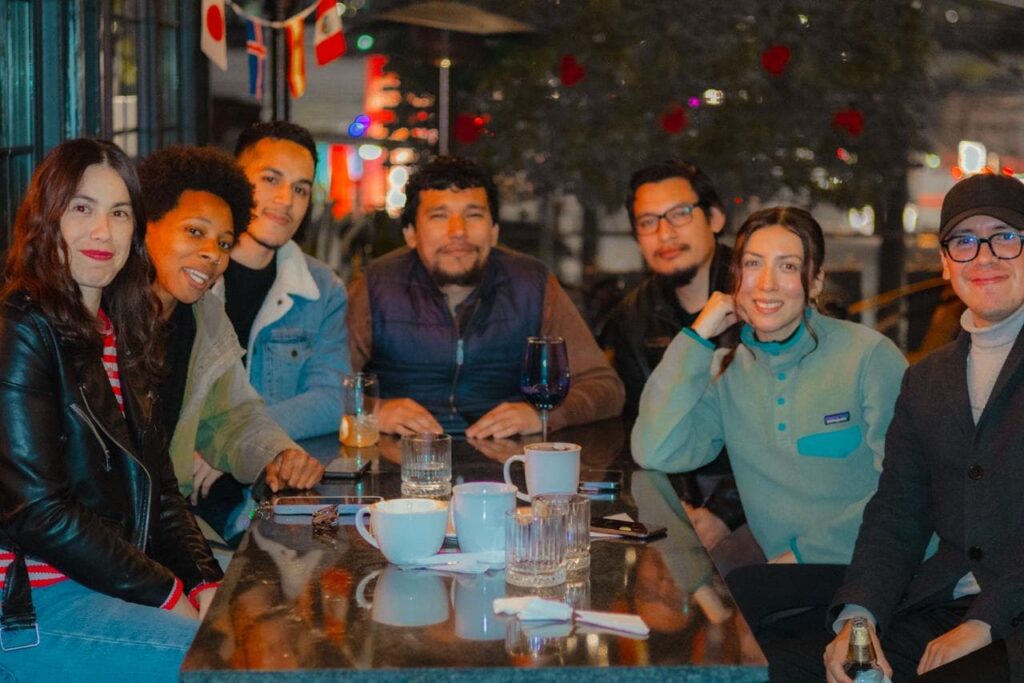
Their language exchange events happen at least once a month in relaxed coffee shop settings, bringing together learners at all levels for judgment-free practice.
“We’ll leave you the page so you can see the next event date,” Daniela says. “It’s not always updated in real time, but send us a message to know when the next one is and we’ll send you the registration link.”
Final Thoughts: The Only Guarantee in Language Learning
As they wrap up, Adrián offers one last truth:
“Learning a language does take a lot of commitment, like anything else, any other knowledge—whether it’s knitting, a sport. It’s learning something new, and it will result in time, effort, discipline, patience. That’s it.”
Daniela agrees: “If someone can learn, it’s because they took the time to do it.”
No magic apps. No secret methods. No shortcuts that bypass the work.
But here’s the good news: The work doesn’t have to be miserable.
When you find Spanish learning strategies that work for YOUR brain, YOUR schedule, YOUR interests, and YOUR goals—the “work” transforms into something closer to play. You’re not grinding through exercises; you’re connecting with people, consuming content you enjoy, and gradually discovering that you can express more of yourself in another language.
That’s when Spanish stops being a subject you’re studying and becomes a tool you’re using.
And that’s the whole point.
Want to join the conversation? Drop your questions in the comments, share your own Spanish learning wins and fails, and let us know which method you’re going to try first. Daniela and Adrián read every comment—yes, even the ones in broken Spanish.